
Human tissue models · AI-supported evidence
Understand how kidney disease damages the heart.
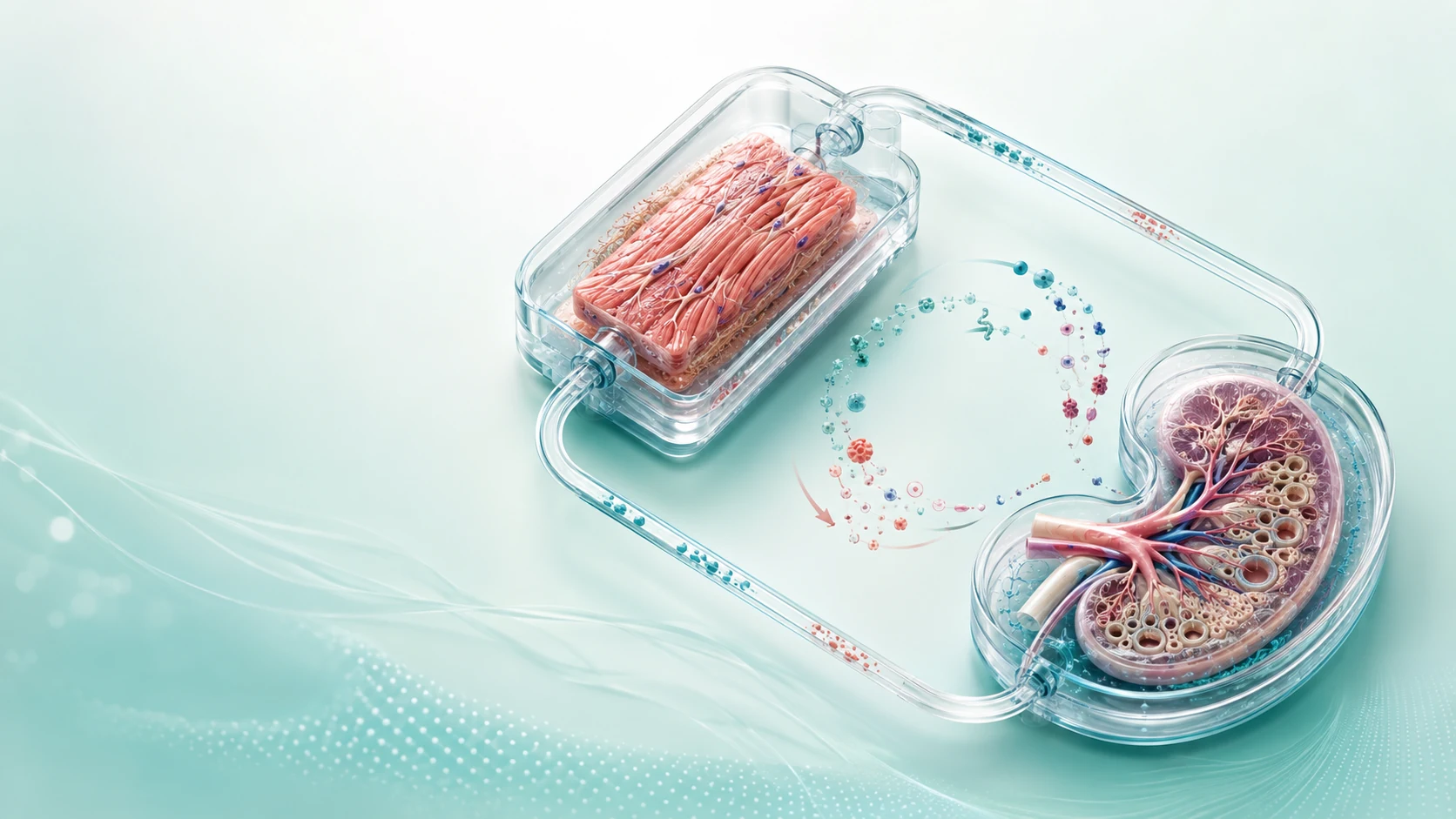
Corelia Bio is developing HETS™, a human engineered tissue system for studying chronic kidney disease–driven cardiac injury and fibrosis, extended by Corelia Intelligence, its AI-based research platform.
In validation design · seeking two design partners
12+ yearsFounder’s translational research experience
Cardio-renal focusCKD, cardiac injury and fibrosis
Göttingen, GermanyLife-sciences ecosystem
The research question
Connect disease context
to tissue response.
For a cardio-renal program, an isolated readout is only part of the picture. The proposed HETS™ approach brings CKD-associated stress, engineered cardiac tissues and functional measurements into one study design.
The aim: help R&D teams investigate mechanisms and prioritize the next experiment with a model built around their question.
The scientific approach
From kidney-associated stress
to a measurable cardiac response.
- Input / renal context
CKD-associated stress
Uremic, inflammatory and metabolic signals define the disease context.
- Interface / exposure
Transfer of soluble signals
A defined exposure links the renal context to the cardiac tissue response.
- Response / cardiac tissue
Engineered myocardial module
Measure remodeling and the response to a reference intervention.
Contractility, relaxation and calcium handling.
Fibrosis, matrix organization and stiffness.
Secreted factors and focused response signatures.
First use case
CKD-driven cardiac injury and fibrosis.
The first planned study asks whether CKD-associated stress can produce a reproducible remodeling phenotype—and whether a reference intervention can partially reverse it.
HFpEF (heart failure with preserved ejection fraction) is a relevant disease context. The initial focus is on remodeling and intervention response.
Explore the validation plan →Questions to co-design
- 01
Target relevance
Does the candidate pathway modify cardiac remodeling?
- 02
Biomarker relevance
Which signatures track with functional rescue?
- 03
Intervention response
Can the study distinguish an informative response from nonspecific toxicity?
Design partnerships
Shape the first study
around your research question.
For translational R&D teams working on CKD, cardio-renal disease or fibrosis. We are seeking two partners to help define the initial context of use.
Start with a conversation.
Bring a non-confidential research question and identify a scientific point of contact. An initial discussion explores whether the proposed model is relevant.
Build a written scope.
The proposed design output covers model boundaries, controls, endpoints, acceptance criteria and the decision the study should support.
Scope an experimental pilot.
Experimental work would follow a separate agreement on feasibility, deliverables, timing, fees and responsibilities.
Scientific input and review of the study design. Materials or data requirements are agreed during scoping.
Set together after the initial discussion, according to study complexity and validation readiness.
Begin non-confidentially. Agree any confidentiality, data-use and IP terms before sharing protected information.
Help define the research question, study conditions and success criteria for the first evidence package.
Explore a design partnership ↗Corelia Intelligence · AI-based platform
Decision-ready evidence for cardio-renal R&D.
Corelia Intelligence is Corelia Bio’s AI-based research workspace. It turns fragmented evidence into structured, reviewable decision dossiers for cardio-renal programs.
It extends HETS™: evidence review helps frame the research question and the decision a study should support, before experimental work is scoped.

How it works
- 01
Frame the question
Define the target, biomarker or intervention question a program needs to answer.
- 02
Organize and review the evidence
Bring fragmented sources into one structured view and review them against the question.
- 03
Export a decision dossier
Share a version-locked dossier that records the evidence behind each decision.

Founder
Ronald St-Louis, PhD
12+ years connecting disease biology with drug-discovery questions.
Experience spans diabetic kidney disease, cardiometabolic disease, fibrosis and target validation, with research and drug-discovery roles across Harvard / Joslin Diabetes Center, OVIBIO and Evotec.
Corelia Bio is in its founding and validation-design phase, within the Göttingen life-sciences ecosystem.
Acknowledgements
Supported on the path from validation design to first studies.
With thanks to the accelerator programs and innovation networks that support Corelia Bio in its founding phase.



For investors
A focused pre-seed validation plan.
Let’s talk
Start with
your question.
Explore a design partnership, scientific collaboration, investment or advisory conversation.
Tell us a little about your interest. Corelia Bio will review your inquiry and follow up by email to discuss the next step.
ronald@corelia-bio.com ↗Prefer a direct conversation? Mention an introductory call in your message.